
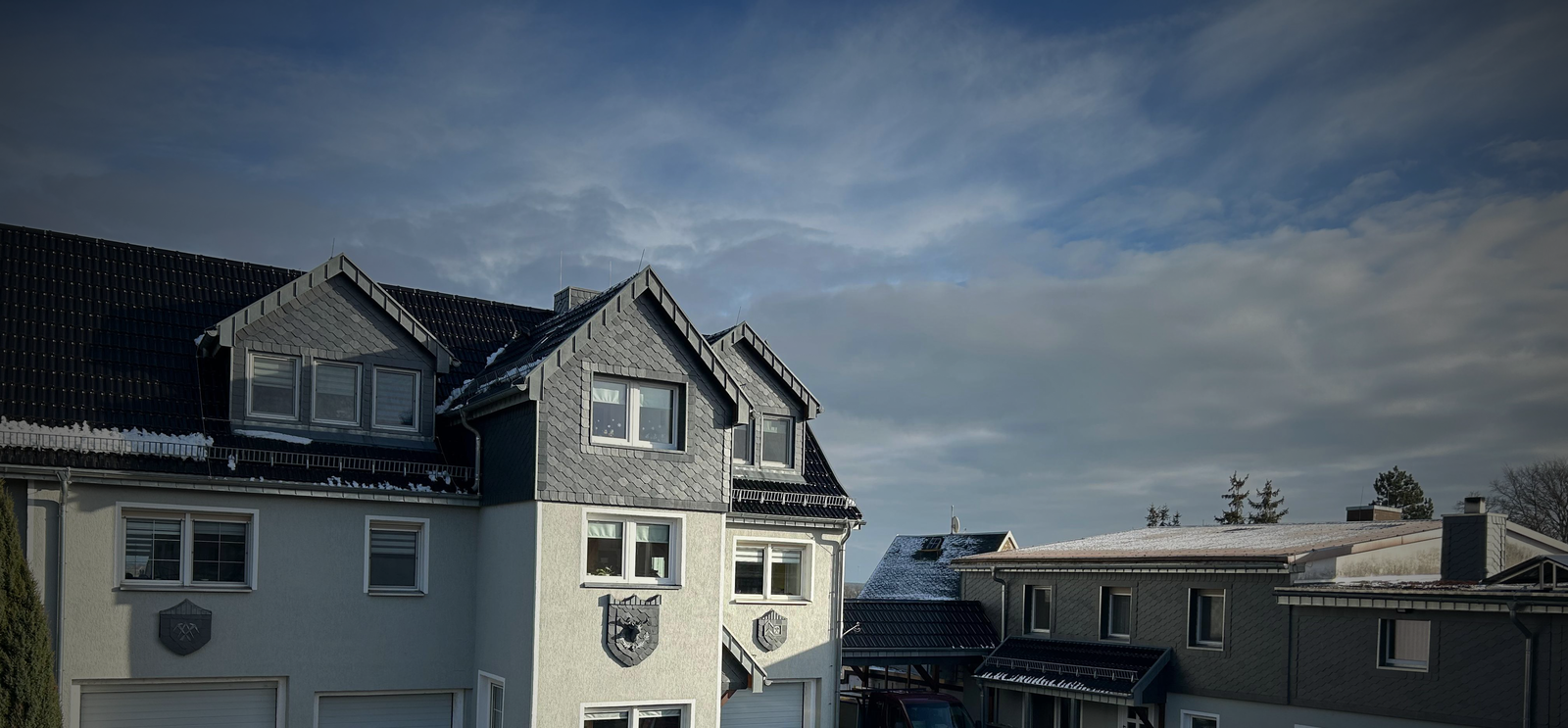
Energy-efficient renovation
Energy-efficient renovation
A step towards a more sustainable future
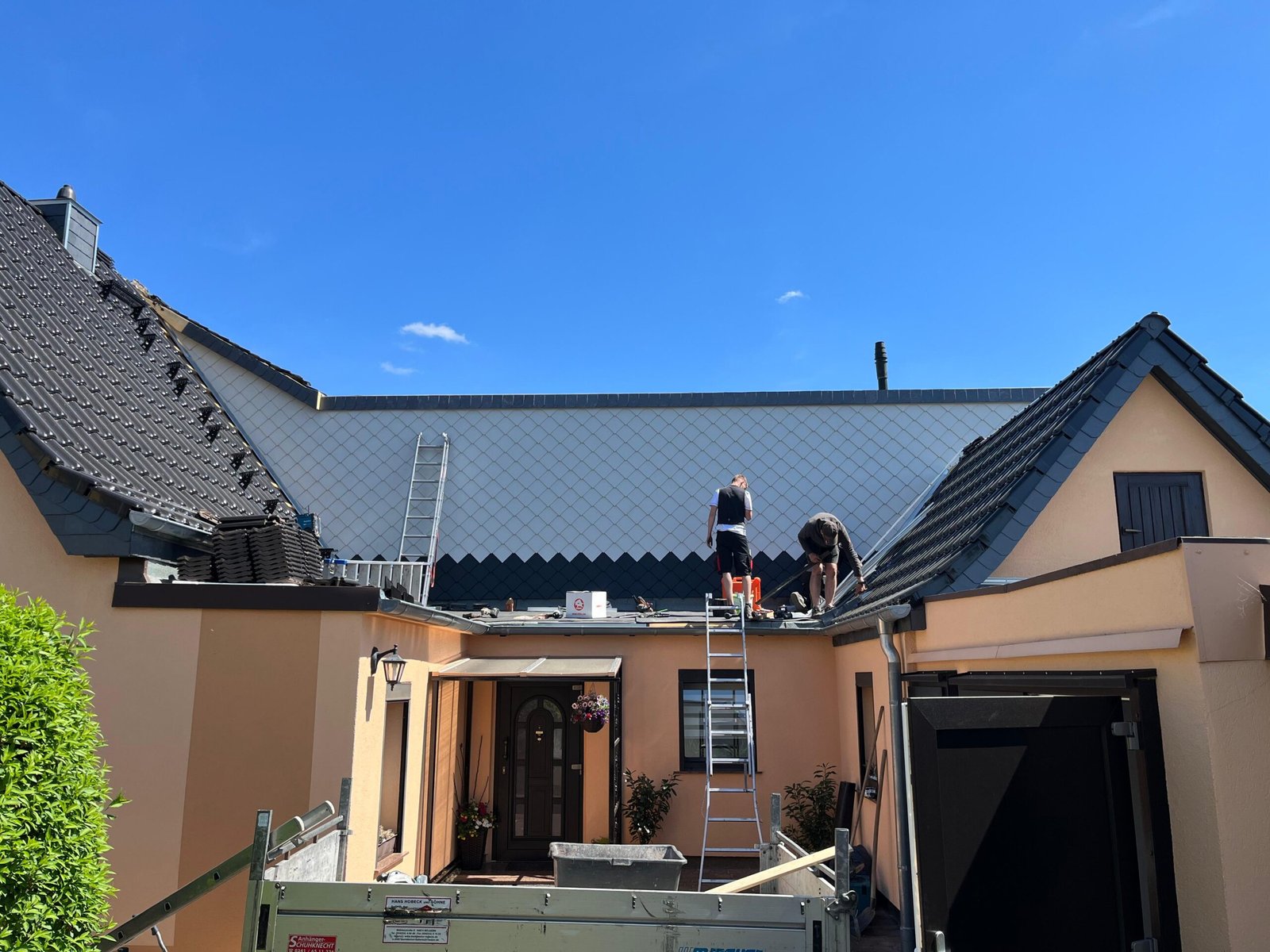
An energy-efficient roof renovation can reduce energy consumption and improve comfort. Insulating the roof is a particularly important part of the work.
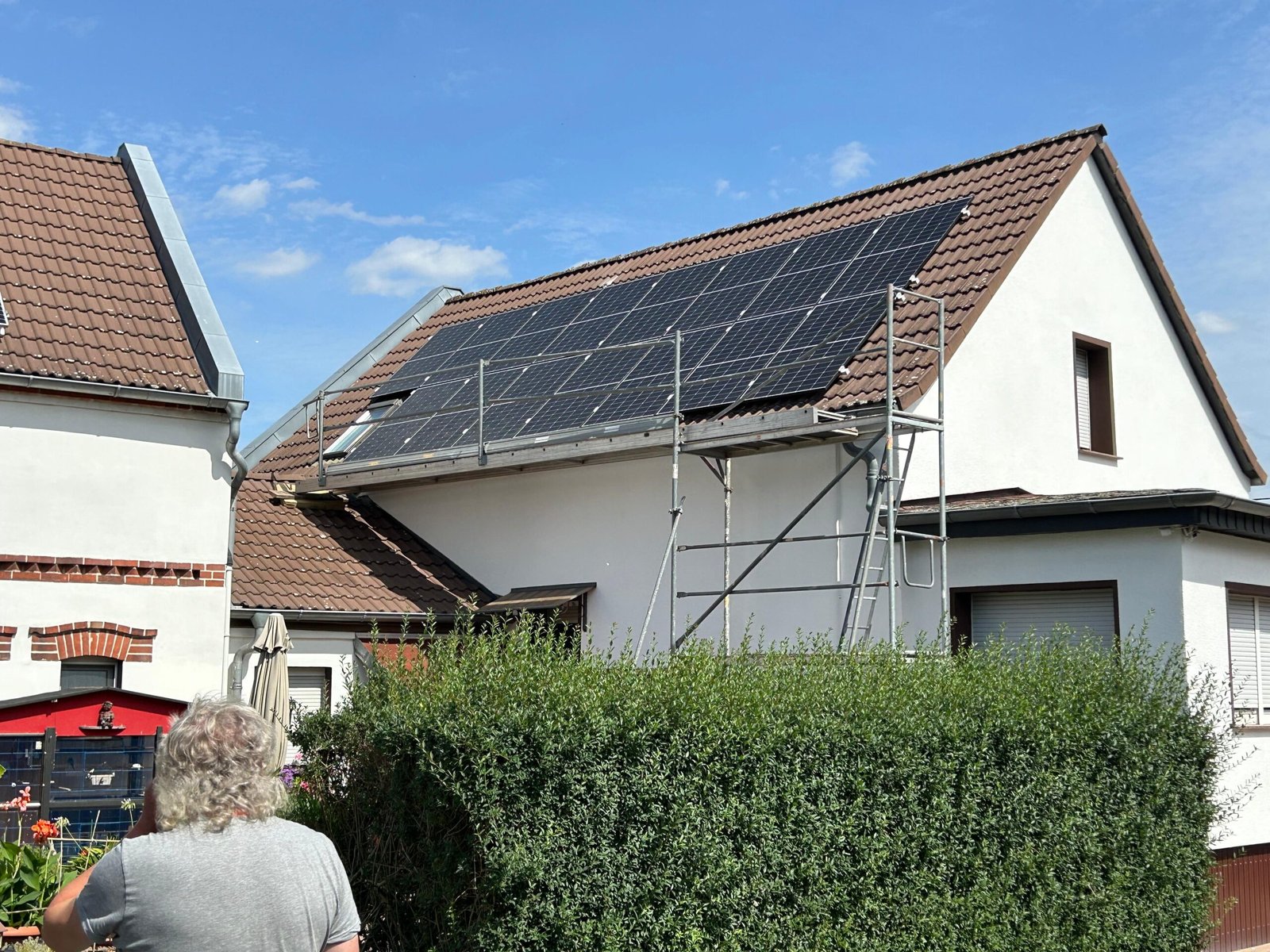
We plan suitable improvements to insulation and airtightness. Solar technology or energy-efficient roof windows can also be part of the renovation.
Benefits of an energy-efficient renovation
- Energy costs: Better insulation can reduce heating costs over time.
- Climate protection: Lower energy demand can reduce emissions.
- Property value: Improved energy efficiency can increase a building's value.
- Comfort: A well-insulated building envelope can improve indoor temperatures.
We help improve the energy efficiency of your roof.
Frequently asked questions
What is an energy-efficient roof renovation?
An energy-efficient roof renovation involves measures that improve a building’s energy efficiency. These include, in particular, roof insulation to reduce heat loss and lower heating costs over the long term.
Depending on the condition of the roof, different insulation methods may be suitable, such as above-rafter insulation, between-rafter insulation or blown-in insulation.
When is an energy-efficient roof renovation worthwhile?
An energy-efficient roof renovation is particularly worthwhile for older buildings with inadequate or no roof insulation.
Typical signs include high heating costs, significant temperature fluctuations in the attic or roof coverings that need replacing anyway.
Professionally installed insulation can reduce heat loss, improve comfort and help maintain the value of the property over the long term.
How much energy can I save with roof insulation?
The amount of energy that can be saved with roof insulation depends on factors including the age of the building, the existing insulation and the condition of the roof.
Especially in older buildings without insulation, an energy-efficient roof renovation can significantly reduce heat loss.
In addition, professionally installed roof insulation improves protection against summer heat and helps keep attic rooms at more comfortable temperatures.
What is the difference between above-rafter and between-rafter insulation?
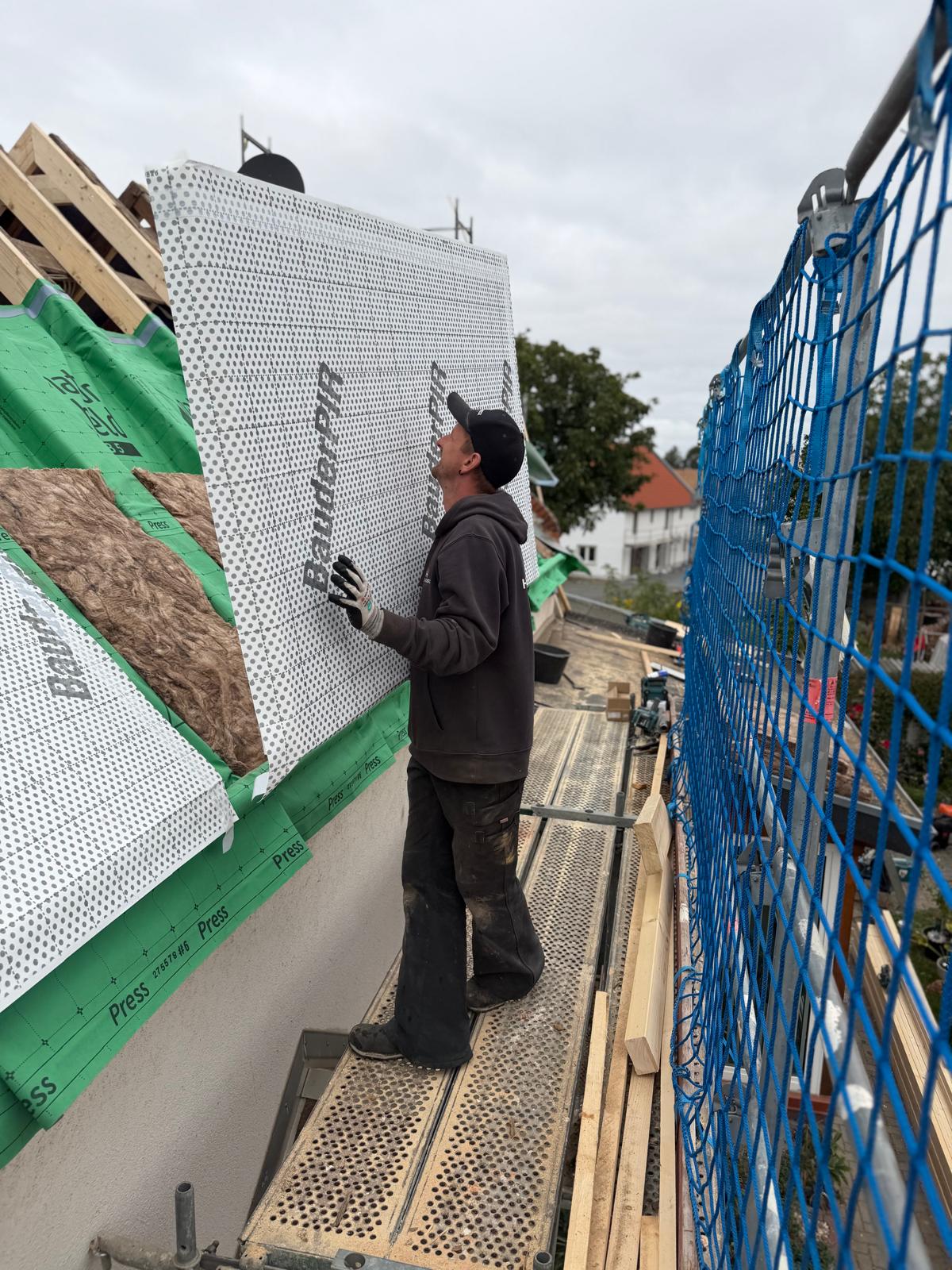
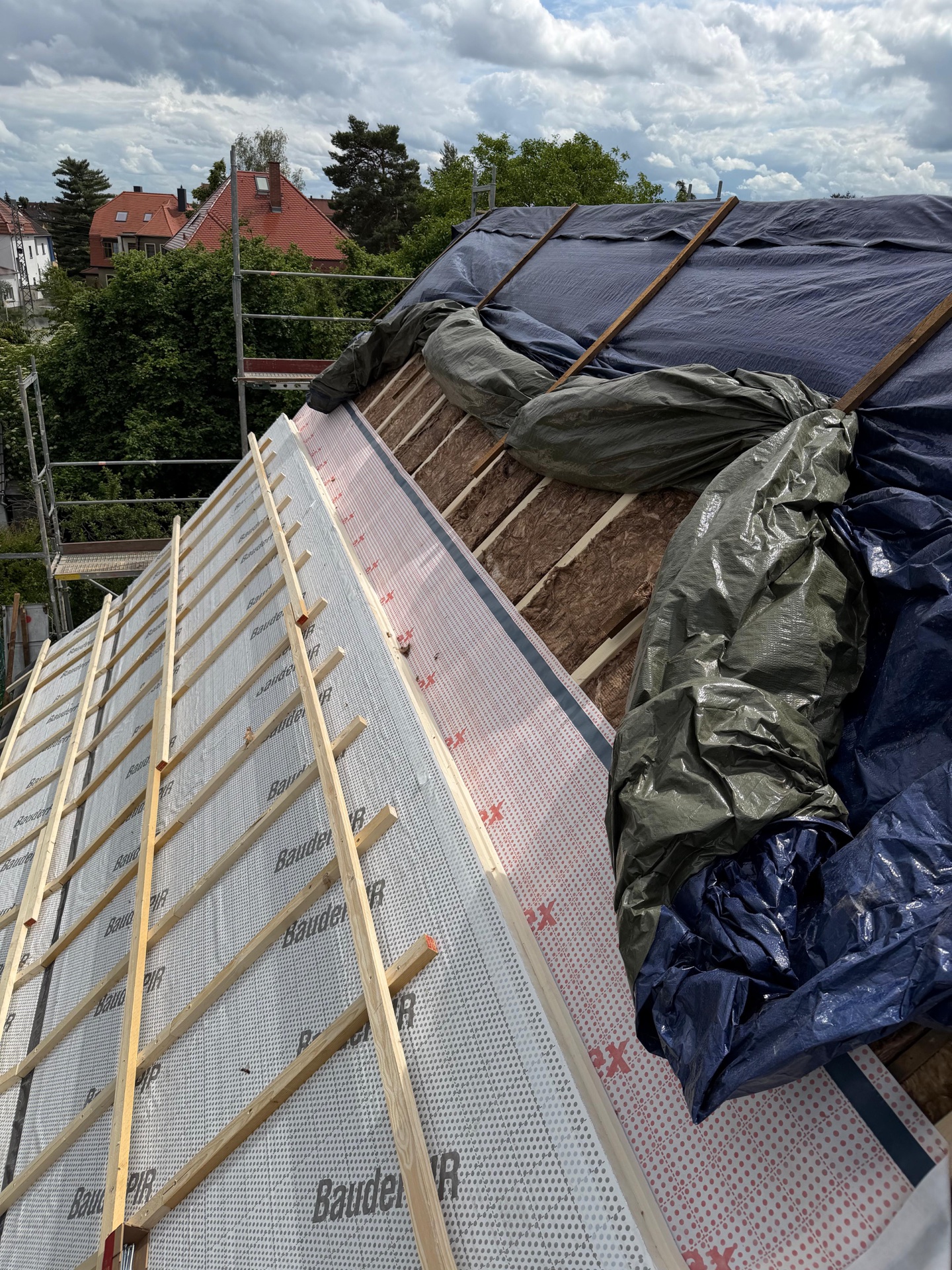
With above-rafter insulation, the insulating material is installed on top of the roof rafters. This creates a largely continuous layer of insulation that can reduce thermal bridging.
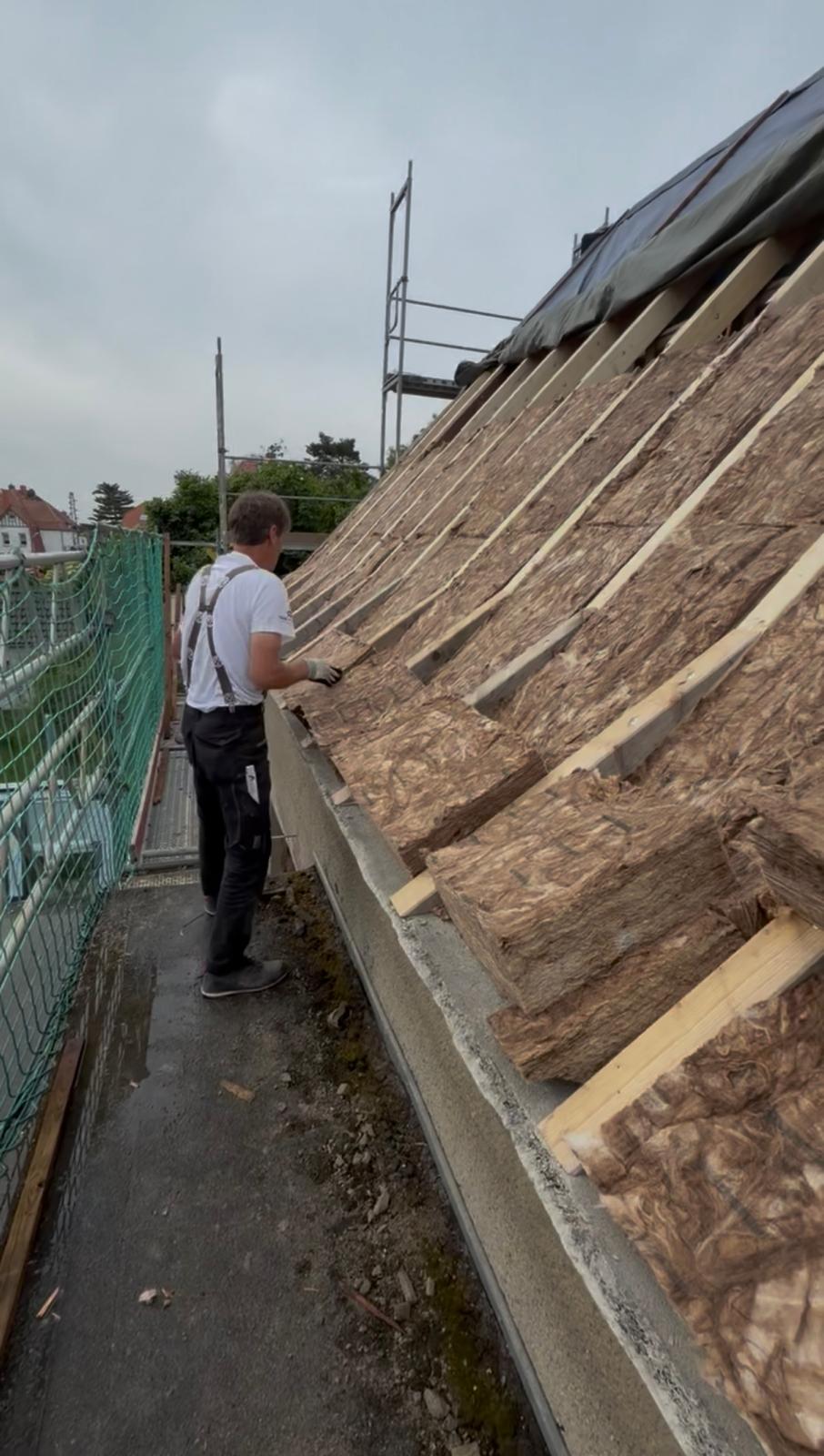
With between-rafter insulation, the insulating material is installed between the existing rafters.
The most suitable method depends on the condition of the roof, the building’s structure and the energy efficiency requirements.
Combining both insulation methods is also possible and can be particularly useful as part of a comprehensive roof renovation.
Which insulation is best suited to an old roof?
Various insulation methods can be used when improving the energy efficiency of an older building.
If the roof covering is to be replaced, above-rafter insulation is often a suitable option. If the existing roof covering is to be retained, between-rafter insulation may be a suitable alternative.
Blown-in insulation can also be used, depending on the roof structure.
We assess the existing roof structure and advise you on a suitable insulation option.
What are the benefits of wood fibre roof insulation?
Wood fibre insulation materials are made from renewable raw materials and are suitable for various roof structures.
They provide good thermal insulation and, thanks to their heat storage capacity, can make a particular contribution to protection against summer heat.
Wood fibre insulation can be used, for example, as above-rafter insulation or in the form of a suitable blown-in insulation product.
Can a roof be insulated without replacing its covering?
Yes, under certain conditions a roof can be insulated without completely replacing its covering.
For suitable roof structures, between-rafter insulation can, for example, be installed from inside.
The options available depend on the condition of the roof covering and the existing roof structure.
How much does an energy-efficient roof renovation cost?
The cost of an energy-efficient roof renovation depends on several factors. These include the roof area, the condition of the roof structure, the insulation method chosen and the desired roof covering.
Additional work, such as replacing roof windows or installing a solar energy system, also affects the total cost.
For a realistic cost estimate, we recommend an individual assessment of your roof.
Can I combine a roof renovation with a solar energy system?
Yes, an energy-efficient roof renovation can often be combined with the installation of a photovoltaic system.
If the roof is being renewed anyway, the necessary work can be coordinated.
For example, the roof covering, insulation and subsequent installation of the solar energy system can be planned together.
We offer both roof renovations and the installation of solar energy systems and can coordinate the two measures.
What funding is available in 2026 for an energy-efficient roof renovation?
Government funding programmes may be available for an energy-efficient roof renovation.
For example, Germany’s Federal Funding for Efficient Buildings (BEG) programme offers grants for individual energy efficiency measures on the building envelope.
KfW promotional loans may also be relevant for a comprehensive energy-efficient renovation.
The funding that can actually be used depends on the applicable requirements and the funding conditions in force at the time of application.
It is important to review funding options with an energy efficiency expert at an early stage and before renovation work begins.